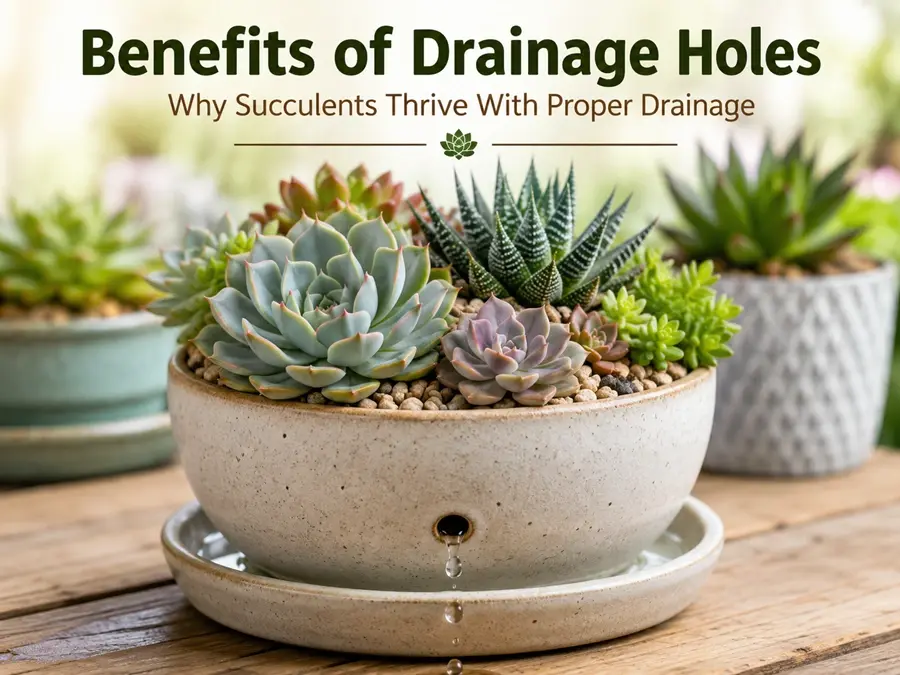
Succulents are some of the easiest and most rewarding plants to grow. Their unique shapes, vibrant colors, and low-maintenance nature make them popular choices for homes, offices, and outdoor spaces. While succulents are known for being hardy plants, one simple feature can make a huge difference in their long-term health: drainage holes.
If you’ve ever wondered whether drainage holes really matter, the answer is yes. In fact, proper drainage is one of the most important factors in successfully growing healthy succulents. Choosing a planter with drainage holes can help prevent common problems and significantly improve your plant’s chances of thriving.
Why Succulents Need Proper Drainage
Succulents are different from many other houseplants because they store water in their leaves, stems, and roots. They evolved in dry environments where water drains quickly through sandy or rocky soil. Their root systems are designed to absorb water when it’s available and dry out between waterings.
When excess water remains trapped inside a planter, succulent roots can quickly become stressed. Unlike tropical houseplants that enjoy consistently moist soil, succulents prefer periods of dryness. A planter that allows water to escape more closely mimics the natural conditions these plants experience in the wild.
Drainage holes provide an easy and effective way to remove excess water before it causes problems.
Prevents Root Rot
The biggest benefit of drainage holes is their ability to help prevent root rot.
Root rot occurs when succulent roots remain wet for extended periods of time. Excess moisture creates an environment where fungi and bacteria can develop, eventually causing roots to decay. Once root rot sets in, it can spread quickly and may permanently damage or kill the plant.
Many succulent owners mistakenly believe they have overwatered their plants when, in reality, the problem is poor drainage. Even a small amount of water trapped at the bottom of a planter can keep roots damp for days or weeks.
Drainage holes allow excess water to flow out immediately after watering, greatly reducing the risk of root rot and helping succulent roots remain healthy.
Makes Watering Easier
One of the challenges of growing succulents is knowing exactly how much water to provide. Fortunately, drainage holes make watering much more forgiving.
Instead of carefully measuring water, you can thoroughly soak the soil until water begins draining from the bottom of the planter. This method encourages deep root growth while ensuring that excess moisture doesn’t remain inside the container.
Many experienced succulent growers prefer to completely water their plants and then allow the soil to dry naturally before watering again. Drainage holes make this process simple and effective.
For beginners, drainage holes remove much of the guesswork that often leads to watering mistakes.
Promotes Healthier Root Systems
Healthy roots are essential for healthy plants.
When succulent roots receive the proper balance of moisture and airflow, they are better able to absorb nutrients and support new growth. Drainage holes help maintain this balance by preventing the soil from becoming compacted and waterlogged.
Proper drainage also improves oxygen circulation within the soil. Plant roots require oxygen to survive and function properly. When soil remains saturated with water, oxygen levels decrease, which can weaken root systems over time.
Succulents grown in well-draining planters often develop stronger roots, resulting in healthier foliage and more vigorous growth.
Helps Prevent Mold and Fungus
Excess moisture doesn’t only affect roots. It can also create ideal conditions for mold and fungus to develop on the soil surface.
If you’ve ever noticed white fuzzy growth or an unpleasant smell coming from your succulent planter, trapped moisture is often the culprit. Soil that remains damp for extended periods encourages fungal growth and may even attract pests such as fungus gnats.
Drainage holes allow moisture to escape more quickly, helping keep the soil surface dry and reducing the likelihood of mold-related problems.
A healthier growing environment means healthier plants and less maintenance for you.
Reduces the Risk of Overwatering
Overwatering is by far the most common reason succulent plants fail. Many new plant owners assume succulents need regular watering schedules similar to other houseplants.
The truth is that succulents are extremely tolerant of dry conditions. They would much rather go a few extra days without water than sit in soggy soil.
Planters with drainage holes act as an extra layer of protection against overwatering mistakes. Even if you accidentally water a little too much, excess moisture can escape rather than collecting at the bottom of the container.
While proper watering habits are still important, drainage holes provide valuable insurance for both beginners and experienced gardeners.
Improves Soil Performance
Succulent soil mixes are specially designed to drain quickly. They typically contain ingredients such as sand, pumice, or perlite that help water move efficiently through the potting mix.
Without drainage holes, even the best succulent soil cannot perform as intended. Water eventually collects at the bottom of the planter, creating wet pockets that defeat the purpose of using fast-draining soil.
A planter with drainage holes allows succulent soil to function properly by encouraging excess moisture to leave the container completely.
Together, high-quality succulent soil and adequate drainage create the ideal growing environment for healthy plants.
Supports Long-Term Plant Health
Succulents are often slow-growing plants that can live for many years when properly cared for. Choosing a planter with drainage holes is one of the simplest ways to promote long-term success.
Plants that receive proper drainage tend to experience fewer issues related to root damage, disease, and stress. Healthy roots lead to better growth, more vibrant colors, and improved overall appearance.
A small design feature at the bottom of a planter can make a significant difference in how well your succulents perform over time.
Can Decorative Planters Still Have Drainage?
Absolutely.
Many succulent planters are designed to combine both beauty and functionality. Decorative planters can include drainage holes without sacrificing style. Some even include matching drainage trays that catch excess water while protecting furniture and countertops.
If you’re shopping for succulent planters, it’s always worth checking whether drainage holes are included. A beautiful planter that also supports plant health offers the best of both worlds.
Final Thoughts
Drainage holes may seem like a small detail, but they play a major role in keeping succulents healthy and thriving. They help prevent root rot, reduce overwatering problems, improve soil performance, promote healthy roots, and make watering significantly easier.
When choosing a succulent planter, drainage should always be one of the first features you consider. Your succulents will thank you with healthier growth, brighter colors, and a much longer lifespan.
Sometimes, the secret to growing beautiful succulents isn’t watering more—it’s simply giving excess water a place to go.