Posted on

Our Succulent Planters Are Made in the USA

Our Webstore

What Are Succulents?

Succulents are unique plants that store water in their leaves, stems, or roots. Their ability to retain water allows them to thrive in dry environments where rainfall is limited.

Because of this natural adaptation, succulents have different care requirements than most houseplants.

Popular varieties include Aloe, Echeveria, Haworthia, Jade Plants, and Sempervivums. They come in hundreds of shapes, sizes, and colors, making them one of the most versatile plants you can grow indoors or outdoors.

One reason succulents are so popular is that they’re easy to care for. They don’t require frequent watering and can tolerate occasional neglect better than many traditional houseplants.

Their beautiful appearance and low-maintenance nature make them perfect for homes, offices, and decorative arrangements.

Why Succulents Need Special Planters

Although succulents are easy to care for, they have one major weakness—too much water.

Overwatering is the number one reason succulent plants die. Unlike tropical plants that enjoy moist soil, succulents prefer their roots to dry completely between waterings.

That’s why choosing the right planter is so important.

A succulent planter isn’t simply a decorative container. It’s designed to provide the growing conditions that succulents naturally prefer.

Proper Drainage Is Essential

Drainage is one of the most important features of any succulent planter.

When succulents are watered, excess water needs somewhere to go. Without drainage holes, water becomes trapped in the pot and increases the risk of root rot.

A planter with proper drainage allows water to flow away from the roots, helping the soil dry more quickly between waterings.

Many succulent planters also include drainage trays that protect furniture while keeping your plants healthy.

Simply put, succulents thrive when their roots aren’t sitting in wet soil.

Airflow Helps Keep Roots Healthy

Succulents naturally grow in sandy and rocky soils that provide excellent airflow around their roots.

Containers that promote air circulation help mimic these growing conditions.

Good airflow allows the potting mix to dry more efficiently and reduces the chance of fungal issues or root damage.

When combined with proper drainage, airflow plays a significant role in keeping succulents healthy for years to come.

Size Matters More Than You Think

Many succulent varieties have relatively shallow root systems.

Large pots may look attractive, but they often hold more soil than necessary. More soil means more retained moisture and longer drying times.

Choosing a planter that’s appropriately sized helps prevent overwatering and encourages healthy root growth.

Shallower containers are often ideal for many popular succulent varieties because they closely resemble the environments where these plants naturally grow.

Don’t Forget the Soil

The planter is only one piece of the puzzle.

Succulents grow best in fast-draining soil mixes that are specifically formulated for cacti and succulents. Traditional potting soil typically holds too much moisture for these drought-tolerant plants.

Using the proper soil alongside a well-designed planter creates the ideal growing environment.

It’s one of the easiest ways to improve the health and longevity of your succulents.

Beautiful and Functional

Succulents deserve more than an ordinary flower pot.

The right succulent planter combines beauty and functionality by providing proper drainage, airflow, and an appropriate growing space for your plants.

Whether you’re displaying a single succulent or creating a stunning arrangement, choosing a planter designed specifically for succulents will help your plants thrive while complementing your home’s dĆ©cor.

A beautiful succulent deserves a beautiful planter that’s designed with its needs in mind.
Posted on

Benefits of Drainage Holes in Succulent Planters

Benefits of Drainage Holes in Succulent Planters

Succulents are some of the easiest and most rewarding plants to grow. Their unique shapes, vibrant colors, and low-maintenance nature make them popular choices for homes, offices, and outdoor spaces. While succulents are known for being hardy plants, one simple feature can make a huge difference in their long-term health: drainage holes.

If you’ve ever wondered whether drainage holes really matter, the answer is yes. In fact, proper drainage is one of the most important factors in successfully growing healthy succulents. Choosing a planter with drainage holes can help prevent common problems and significantly improve your plant’s chances of thriving.

Why Succulents Need Proper Drainage

Succulents are different from many other houseplants because they store water in their leaves, stems, and roots. They evolved in dry environments where water drains quickly through sandy or rocky soil. Their root systems are designed to absorb water when it’s available and dry out between waterings.

When excess water remains trapped inside a planter, succulent roots can quickly become stressed. Unlike tropical houseplants that enjoy consistently moist soil, succulents prefer periods of dryness. A planter that allows water to escape more closely mimics the natural conditions these plants experience in the wild.

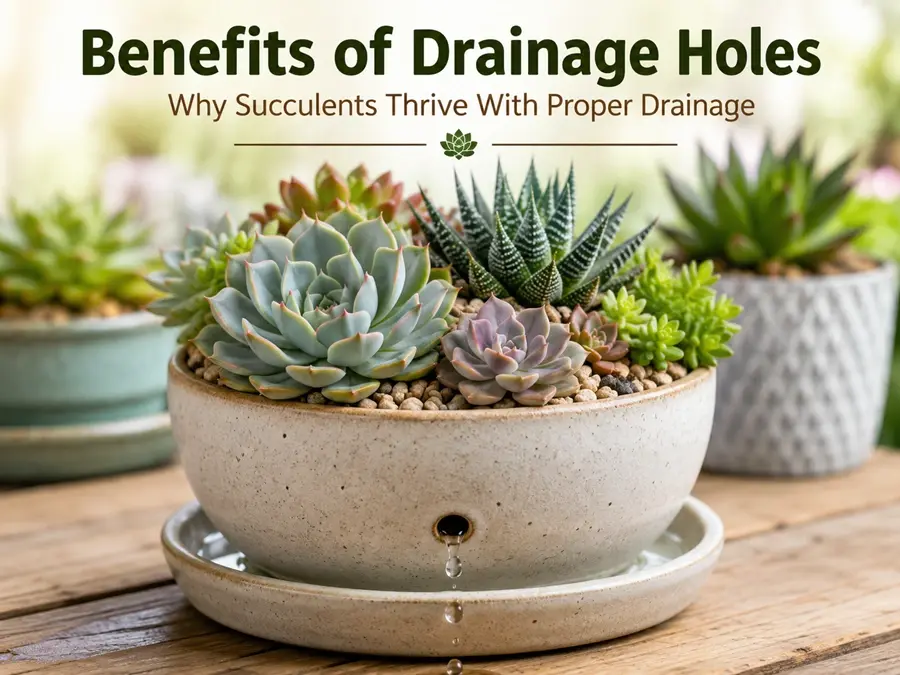
Drainage holes provide an easy and effective way to remove excess water before it causes problems.

Prevents Root Rot

The biggest benefit of drainage holes is their ability to help prevent root rot.

Root rot occurs when succulent roots remain wet for extended periods of time. Excess moisture creates an environment where fungi and bacteria can develop, eventually causing roots to decay. Once root rot sets in, it can spread quickly and may permanently damage or kill the plant.

Many succulent owners mistakenly believe they have overwatered their plants when, in reality, the problem is poor drainage. Even a small amount of water trapped at the bottom of a planter can keep roots damp for days or weeks.

Drainage holes allow excess water to flow out immediately after watering, greatly reducing the risk of root rot and helping succulent roots remain healthy.

Makes Watering Easier

One of the challenges of growing succulents is knowing exactly how much water to provide. Fortunately, drainage holes make watering much more forgiving.

Instead of carefully measuring water, you can thoroughly soak the soil until water begins draining from the bottom of the planter. This method encourages deep root growth while ensuring that excess moisture doesn’t remain inside the container.

Many experienced succulent growers prefer to completely water their plants and then allow the soil to dry naturally before watering again. Drainage holes make this process simple and effective.

For beginners, drainage holes remove much of the guesswork that often leads to watering mistakes.

Promotes Healthier Root Systems

Healthy roots are essential for healthy plants.

When succulent roots receive the proper balance of moisture and airflow, they are better able to absorb nutrients and support new growth. Drainage holes help maintain this balance by preventing the soil from becoming compacted and waterlogged.

Proper drainage also improves oxygen circulation within the soil. Plant roots require oxygen to survive and function properly. When soil remains saturated with water, oxygen levels decrease, which can weaken root systems over time.

Succulents grown in well-draining planters often develop stronger roots, resulting in healthier foliage and more vigorous growth.

Helps Prevent Mold and Fungus

Excess moisture doesn’t only affect roots. It can also create ideal conditions for mold and fungus to develop on the soil surface.

If you’ve ever noticed white fuzzy growth or an unpleasant smell coming from your succulent planter, trapped moisture is often the culprit. Soil that remains damp for extended periods encourages fungal growth and may even attract pests such as fungus gnats.

Drainage holes allow moisture to escape more quickly, helping keep the soil surface dry and reducing the likelihood of mold-related problems.

A healthier growing environment means healthier plants and less maintenance for you.

Reduces the Risk of Overwatering

Overwatering is by far the most common reason succulent plants fail. Many new plant owners assume succulents need regular watering schedules similar to other houseplants.

The truth is that succulents are extremely tolerant of dry conditions. They would much rather go a few extra days without water than sit in soggy soil.

Planters with drainage holes act as an extra layer of protection against overwatering mistakes. Even if you accidentally water a little too much, excess moisture can escape rather than collecting at the bottom of the container.

While proper watering habits are still important, drainage holes provide valuable insurance for both beginners and experienced gardeners.

Improves Soil Performance

Succulent soil mixes are specially designed to drain quickly. They typically contain ingredients such as sand, pumice, or perlite that help water move efficiently through the potting mix.

Without drainage holes, even the best succulent soil cannot perform as intended. Water eventually collects at the bottom of the planter, creating wet pockets that defeat the purpose of using fast-draining soil.

A planter with drainage holes allows succulent soil to function properly by encouraging excess moisture to leave the container completely.

Together, high-quality succulent soil and adequate drainage create the ideal growing environment for healthy plants.

Supports Long-Term Plant Health

Succulents are often slow-growing plants that can live for many years when properly cared for. Choosing a planter with drainage holes is one of the simplest ways to promote long-term success.

Plants that receive proper drainage tend to experience fewer issues related to root damage, disease, and stress. Healthy roots lead to better growth, more vibrant colors, and improved overall appearance.

A small design feature at the bottom of a planter can make a significant difference in how well your succulents perform over time.

Can Decorative Planters Still Have Drainage?

Absolutely.

Many succulent planters are designed to combine both beauty and functionality. Decorative planters can include drainage holes without sacrificing style. Some even include matching drainage trays that catch excess water while protecting furniture and countertops.

If you’re shopping for succulent planters, it’s always worth checking whether drainage holes are included. A beautiful planter that also supports plant health offers the best of both worlds.

Final Thoughts

Drainage holes may seem like a small detail, but they play a major role in keeping succulents healthy and thriving. They help prevent root rot, reduce overwatering problems, improve soil performance, promote healthy roots, and make watering significantly easier.

When choosing a succulent planter, drainage should always be one of the first features you consider. Your succulents will thank you with healthier growth, brighter colors, and a much longer lifespan.

Sometimes, the secret to growing beautiful succulents isn’t watering more—it’s simply giving excess water a place to go.

Posted on

How To Choose The Right Size Planter For Your Succulents

How To Choose The Right Size Planter For Succulents

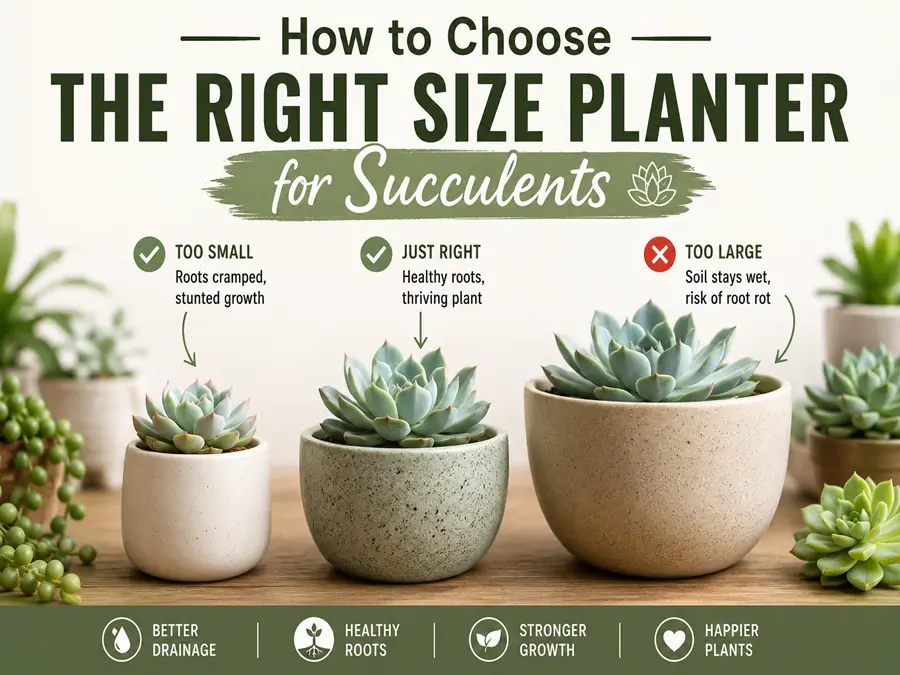
Choosing the right size planter for your succulents is one of the most important decisions you’ll make as a plant owner. While it’s tempting to choose a pot based on appearance alone, the size of the planter can have a major impact on your succulent’s health and growth.

Unlike many houseplants, succulents prefer conditions that allow their roots to dry out between waterings. A planter that is too large can hold excess moisture, while one that is too small may restrict healthy root growth. Finding the right balance helps prevent common problems like root rot and overwatering.

Why Planter Size Matters

Succulents are naturally adapted to survive in dry environments. Their roots are designed to absorb water quickly and then remain relatively dry for extended periods. Because of this, they don’t need a large amount of soil surrounding their roots.

The larger the planter, the more potting mix it contains. More soil means more moisture retention, which increases the amount of time it takes for the soil to dry completely. For succulents, constantly damp soil is often the fastest path to root rot.

Choosing an appropriately sized planter provides several benefits:

  • Better moisture control
  • Healthier root development
  • Reduced risk of overwatering
  • Improved drainage
  • More attractive plant presentation
  • Easier maintenance

A properly sized planter keeps your succulent comfortable and thriving for years.

How Much Bigger Should a Planter Be?

A good rule of thumb is to choose a planter that is only slightly larger than the root ball of your succulent.

For most succulents, the planter should be approximately one-half inch to one inch wider than the plant itself. Succulents generally prefer snug growing conditions rather than oversized containers.

For example:

  • A 2-inch succulent works well in a 2.5 to 3-inch planter.
  • A 4-inch succulent typically fits nicely in a 5-inch planter.
  • A larger 6-inch succulent may prefer a 7-inch planter.

There’s rarely a need to place a small succulent into a large decorative pot. While it may look attractive initially, the excess soil can create watering issues that make it difficult for the plant to thrive.

Avoid Planters That Are Too Large

Many beginner succulent owners make the mistake of purchasing oversized planters. It may seem like giving your plant extra room to grow is a good idea, but succulents don’t behave like fast-growing tropical houseplants.

When planted in an oversized container, several problems can occur:

  • Soil remains wet longer.
  • Roots become susceptible to rot.
  • The plant may focus on root growth instead of producing new leaves or offsets.
  • Watering becomes more difficult to manage.

A succulent sitting in a planter that’s two or three times larger than necessary often struggles simply because the soil isn’t drying at the proper rate.

If you’re unsure between two sizes, it’s usually safer to choose the smaller planter.

Can a Planter Be Too Small?

Yes. While succulents enjoy snug containers, they still need enough space for their root systems to remain healthy.

Signs that a planter may be too small include:

  • Roots growing through drainage holes
  • Soil drying out extremely quickly
  • Slowed or stunted growth
  • The plant becoming top-heavy and tipping over
  • Roots circling tightly inside the pot

Fortunately, most succulents grow slowly and don’t require frequent repotting. Many varieties can remain in the same planter for several years before needing additional space.

Choosing the Right Depth

Planter depth is often overlooked when selecting containers for succulents.

Many succulent varieties have relatively shallow root systems. Because of this, deep planters aren’t always necessary. In fact, shallow planters can provide several advantages.

Shallow planters:

  • Dry faster after watering
  • Help prevent excess moisture buildup
  • Create attractive succulent displays
  • Work well for multiple small succulents

Deep planters may be appropriate for larger succulent varieties or those with more substantial root systems, but most common succulents are perfectly happy in containers that aren’t particularly deep.

For many small succulents, a planter that’s three to five inches deep is more than sufficient.

Single Succulent or Multiple Succulents?

The size requirements change slightly when planting multiple succulents together.

If you’re creating a succulent arrangement, you’ll want to provide enough room for each plant while still avoiding excessive amounts of soil.

Consider:

  • The mature size of each succulent
  • Spacing between plants
  • Drainage requirements
  • Future growth patterns

A shallow bowl planter is often ideal for succulent arrangements. These containers allow multiple plants to share space without trapping excess moisture deep within the planter.

When arranging several succulents together, it’s perfectly acceptable for them to grow closely together. Many beautiful succulent displays intentionally create a crowded appearance that mimics their natural growing habits.

Repotting Your Succulents

Succulents don’t need frequent repotting. In fact, they generally prefer stability and can remain in their containers much longer than other houseplants.

Some signs that it’s time to move your succulent into a slightly larger planter include:

  • Roots extending from drainage holes
  • Reduced growth despite proper care
  • Soil drying out almost immediately after watering
  • The plant becoming unstable or top-heavy
  • Visible overcrowding

When repotting, avoid jumping several planter sizes at once. Moving from a 2-inch pot directly into an 8-inch planter can create unnecessary watering challenges.

Instead, increase the planter size gradually by about one inch at a time.

Don’t Forget Drainage

No discussion about planter size is complete without mentioning drainage.

Even the perfect-sized planter can create problems if excess water has nowhere to go. Drainage holes allow water to escape and help the soil dry properly between waterings.

If you choose a decorative planter without drainage holes, you’ll need to be especially careful when watering or consider using a nursery pot inside the decorative container.

Proper drainage and proper planter size work together to create the ideal environment for healthy succulents.

Final Thoughts

Choosing the right size planter for your succulents doesn’t have to be complicated. In most cases, slightly smaller is better than significantly larger. Succulents prefer containers that fit their root systems comfortably without surrounding them with excessive amounts of moisture-retaining soil.

When selecting a planter, consider the width, depth, drainage, and future growth of your succulent. A properly sized planter not only keeps your plant healthier but also makes caring for it much easier.

With the right planter, your succulents can thrive while adding beauty and personality to your home or garden for years to come.